
Shotcrete
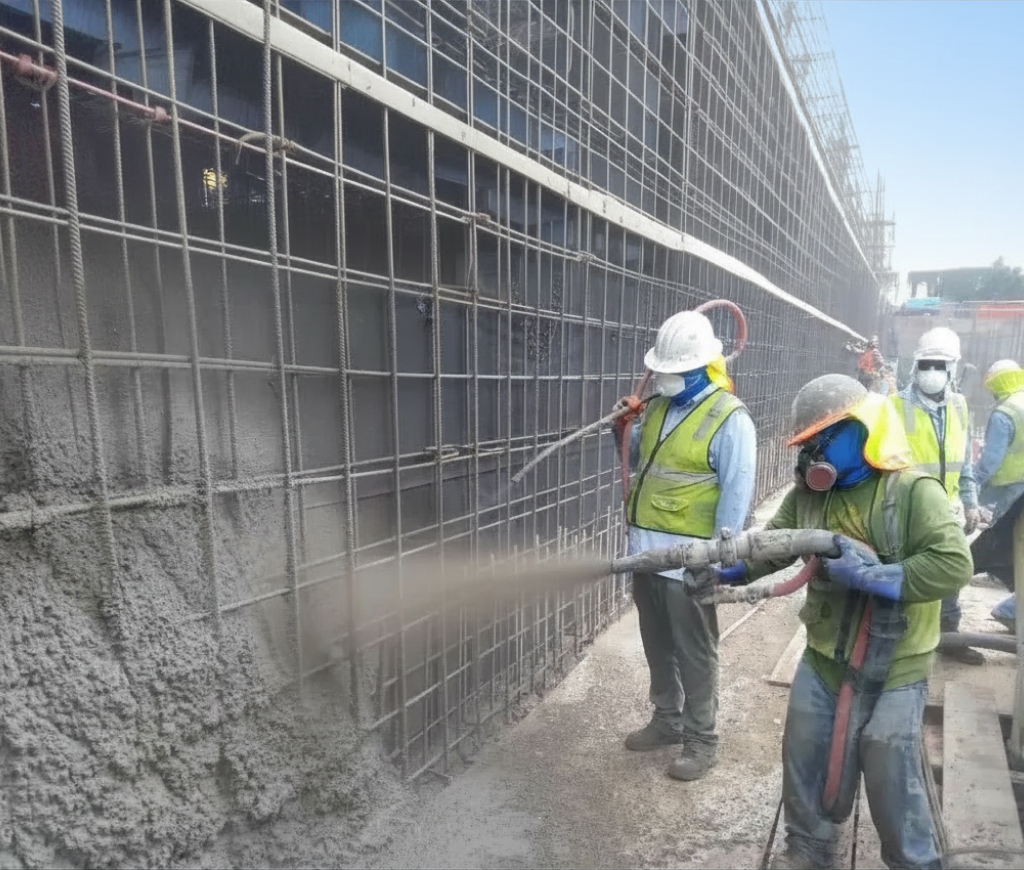
Shotcrete Dry & Wet at Venus Engineering are used to rebuild, reprofile and protect concrete elements where access, geometry or scale make conventional form-and-pour repairs inefficient or impractical. By pneumatically projecting concrete or mortar onto prepared substrates, we can reinstate cover, restore sections and strengthen deteriorated components such as basement walls, core walls, slab soffits, and retaining structures with minimal formwork and reduced downtime.
The process starts with proper surface preparation and treatment of reinforcement so that the new shotcrete layer bonds effectively to the existing structure. Mixes and application methods are selected to suit the environment and performance requirements—whether the priority is structural enhancement, abrasion resistance, impact protection or improved durability. Well-controlled application maintains the required thickness, compaction and finish, ensuring that repairs perform as designed, not just look acceptable on day one.
Dry Shotcrete is often integrated with other concrete repair and strengthening techniques, including crack injection, local patching, anchoring and protective coatings. This combined approach allows us to address both the visible damage and the underlying causes of deterioration, improving durability and reducing the likelihood of repeated interventions.
From a sustainability and asset management perspective, shotcrete is a practical way to extend the service life of existing structures, retain embodied carbon and keep critical assets in operation. Venus Engineering focuses on delivering shotcrete solutions that are engineered, buildable and aligned with real-world budget, access and operational constraints—helping to restore confidence in the structure while managing long-term risk and maintenance exposure.
The process starts with proper surface preparation and treatment of reinforcement so that the new shotcrete layer bonds effectively to the existing structure. Mixes and application methods are selected to suit the environment and performance requirements—whether the priority is structural enhancement, abrasion resistance, impact protection or improved durability. Well-controlled application maintains the required thickness, compaction and finish, ensuring that repairs perform as designed, not just look acceptable on day one.
Dry Shotcrete is often integrated with other concrete repair and strengthening techniques, including crack injection, local patching, anchoring and protective coatings. This combined approach allows us to address both the visible damage and the underlying causes of deterioration, improving durability and reducing the likelihood of repeated interventions.
For asset owners and managers, it provides a flexible option for large or complex repair areas without the cost and disruption associated with full replacement.
From a sustainability and asset management perspective, shotcrete is a practical way to extend the service life of existing structures, retain embodied carbon and keep critical assets in operation. Venus Engineering focuses on delivering shotcrete solutions that are engineered, buildable and aligned with real-world budget, access and operational constraints—helping to restore confidence in the structure while managing long-term risk and maintenance exposure.
Shotcrete Dry & Wet at Venus Engineering are used to rebuild, reprofile and protect concrete elements where access, geometry or scale make conventional form-and-pour repairs inefficient or impractical. By pneumatically projecting concrete or mortar onto prepared substrates, we can reinstate cover, restore sections and strengthen deteriorated components such as basement walls, core walls, slab soffits, and retaining structures with minimal formwork and reduced downtime.
The process starts with proper surface preparation and treatment of reinforcement so that the new shotcrete layer bonds effectively to the existing structure. Mixes and application methods are selected to suit the environment and performance requirements—whether the priority is structural enhancement, abrasion resistance, impact protection or improved durability. Well-controlled application maintains the required thickness, compaction and finish, ensuring that repairs perform as designed, not just look acceptable on day one.
Dry Shotcrete is often integrated with other concrete repair and strengthening techniques, including crack injection, local patching, anchoring and protective coatings. This combined approach allows us to address both the visible damage and the underlying causes of deterioration, improving durability and reducing the likelihood of repeated interventions.
The process starts with proper surface preparation and treatment of reinforcement so that the new shotcrete layer bonds effectively to the existing structure. Mixes and application methods are selected to suit the environment and performance requirements—whether the priority is structural enhancement, abrasion resistance, impact protection or improved durability. Well-controlled application maintains the required thickness, compaction and finish, ensuring that repairs perform as designed, not just look acceptable on day one.
Dry Shotcrete is often integrated with other concrete repair and strengthening techniques, including crack injection, local patching, anchoring and protective coatings. This combined approach allows us to address both the visible damage and the underlying causes of deterioration, improving durability and reducing the likelihood of repeated interventions.
For asset owners and managers, it provides a flexible option for large or complex repair areas without the cost and disruption associated with full replacement.
From a sustainability and asset management perspective, shotcrete is a practical way to extend the service life of existing structures, retain embodied carbon and keep critical assets in operation. Venus Engineering focuses on delivering shotcrete solutions that are engineered, buildable and aligned with real-world budget, access and operational constraints—helping to restore confidence in the structure while managing long-term risk and maintenance exposure.